Rollator Frame Geometry and Weight at Rest
Rollator frame geometry distributes a seated or standing rider's weight across four contact points through triangulat...
Read it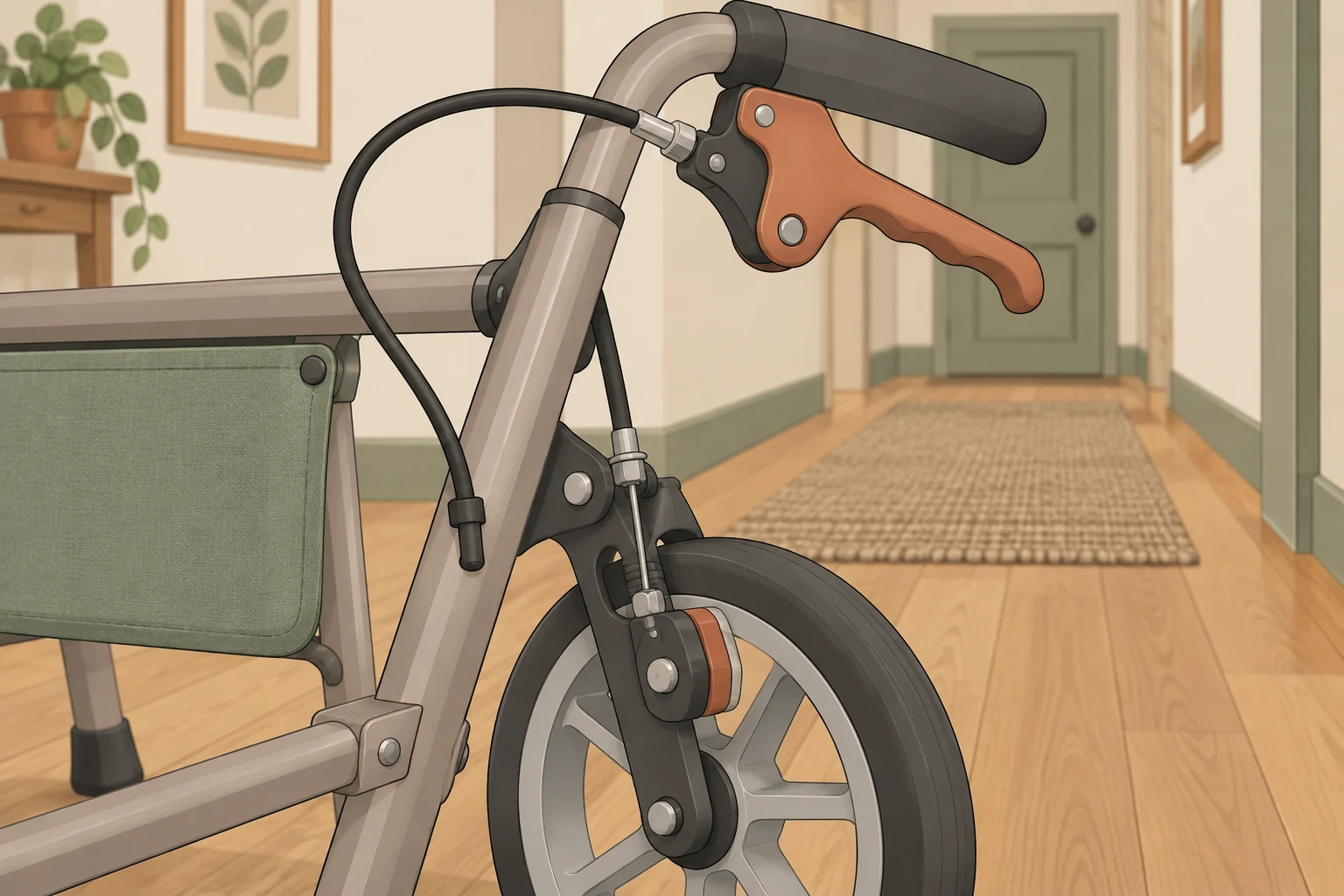
All Mobility Aids articles from Mobility Made Clear.
Rollator frame geometry distributes a seated or standing rider's weight across four contact points through triangulat...
Read itA rollator seat suspends load across a fabric or slatted span between two side rails, and the tension mechanics deter...
Read itCane shaft material — aluminum, carbon fiber, or wood — changes how axial load and vibration travel from ground to ha...
Read itCaster wheel diameter on a rollator directly governs turning radius, floor clearance, and rolling resistance through ...
Read itWheelchair camber angle tilts the rear wheels outward, widening the base and shifting the center of gravity — here is...
Read itA cane tip's rubber compound reduces ground-impact force through viscoelastic deformation, friction, and material geo...
Read itA folding walker frame uses hinged cross-braces and hollow aluminum tubing to store elastic energy during loading and...
Read itA walker's cross-brace converts downward hand force into lateral tension across both side frames, keeping the structu...
Read itHow rear-wheel position, camber, and diameter change how much force a manual wheelchair push actually requires.
Read articleThe biomechanics behind cane height — how the measurement relates to elbow angle, wrist position, and load transfer.
Read articleThe mechanics of a rollator's hand-brake and parking-brake system, and how it differs from a bicycle brake.
Read article