How EVA Foam Density Changes Orthotic Insole Rebound
EVA foam density determines how much energy an orthotic insole absorbs versus returns with each step, directly shapin...
Read it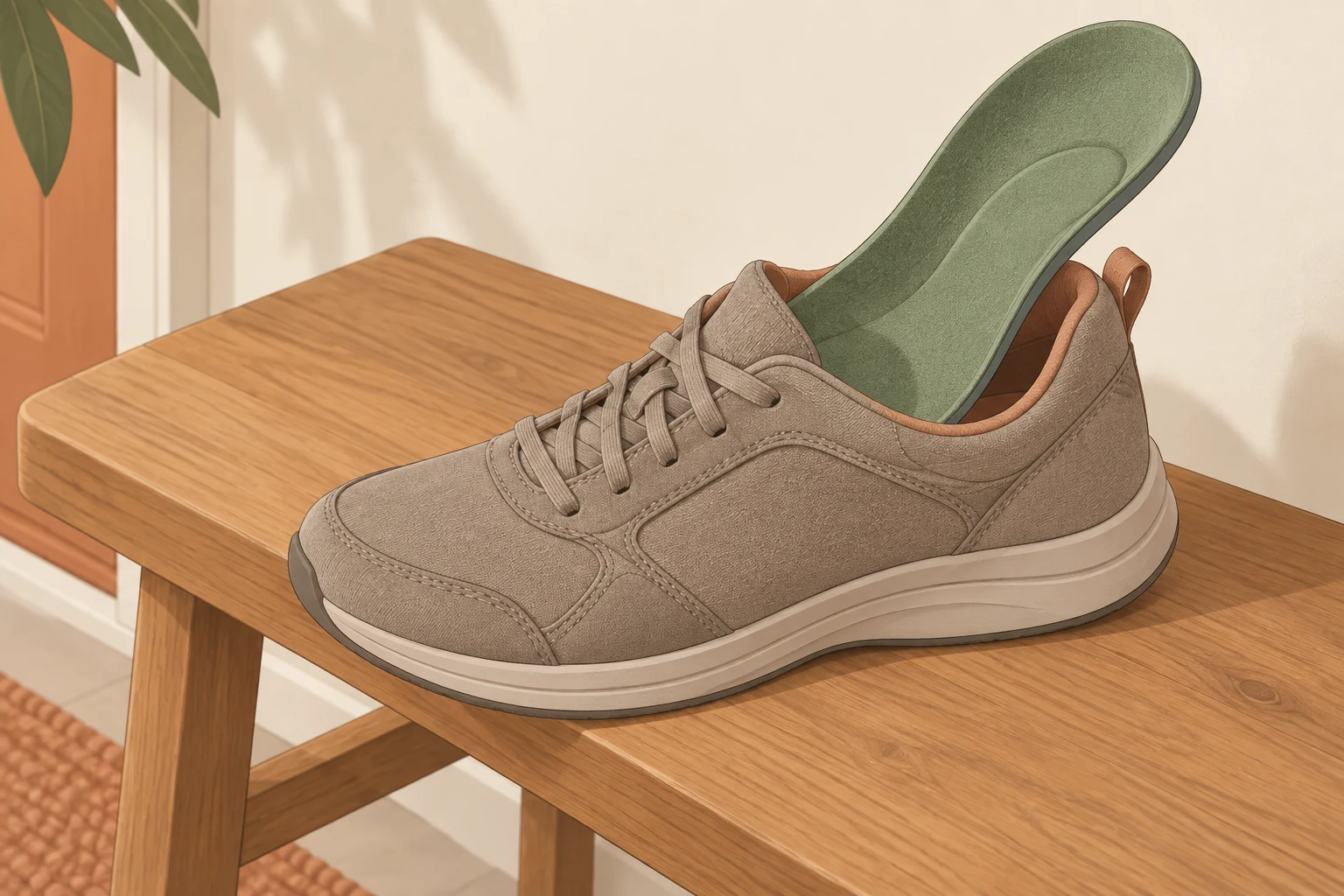
All Orthotic Footwear articles from Mobility Made Clear.
EVA foam density determines how much energy an orthotic insole absorbs versus returns with each step, directly shapin...
Read itCollar stiffness in orthotic footwear limits ankle range of motion by distributing load across the shaft material, no...
Read itOutsole flex grooves are engineered channels that determine exactly where and how much a shoe bends during the push-o...
Read itMidsole foam density determines how much energy an arch support returns with each step, shaping the mechanical reboun...
Read itAdhesive chemistry, surface texture, and shell geometry explain why an orthotic insole stays fixed inside a shoe duri...
Read itShank stiffness in orthotic footwear mechanically limits midfoot bending by distributing load along the shoe's longit...
Read itMetatarsal pads redistribute plantar load away from metatarsal heads by elevating the shaft just proximal to the ball...
Read itToe box width in orthotic footwear directly alters how plantar pressure distributes across the metatarsal heads and p...
Read itHeel counter stiffness in orthotic footwear limits rearfoot eversion and inversion by transmitting ground reaction fo...
Read itRocker soles redistribute plantar pressure by shifting the pivot point of the gait cycle away from specific anatomica...
Read itThe process behind a custom orthotic insert, from foot casting to CAD milling, and how it differs from an off-the-shelf insole.
Read articleWhat actually distinguishes an orthotic shoe from ordinary footwear, structurally rather than by marketing label.
Read articleThe mechanics behind arch support — how a raised contour changes pressure distribution across the foot.
Read article