Elastic Waistbands in Absorbent Briefs: Seal Pressure
Elastic waistbands in absorbent briefs generate seal pressure through textile mechanics, not adhesion — here is how e...
Read it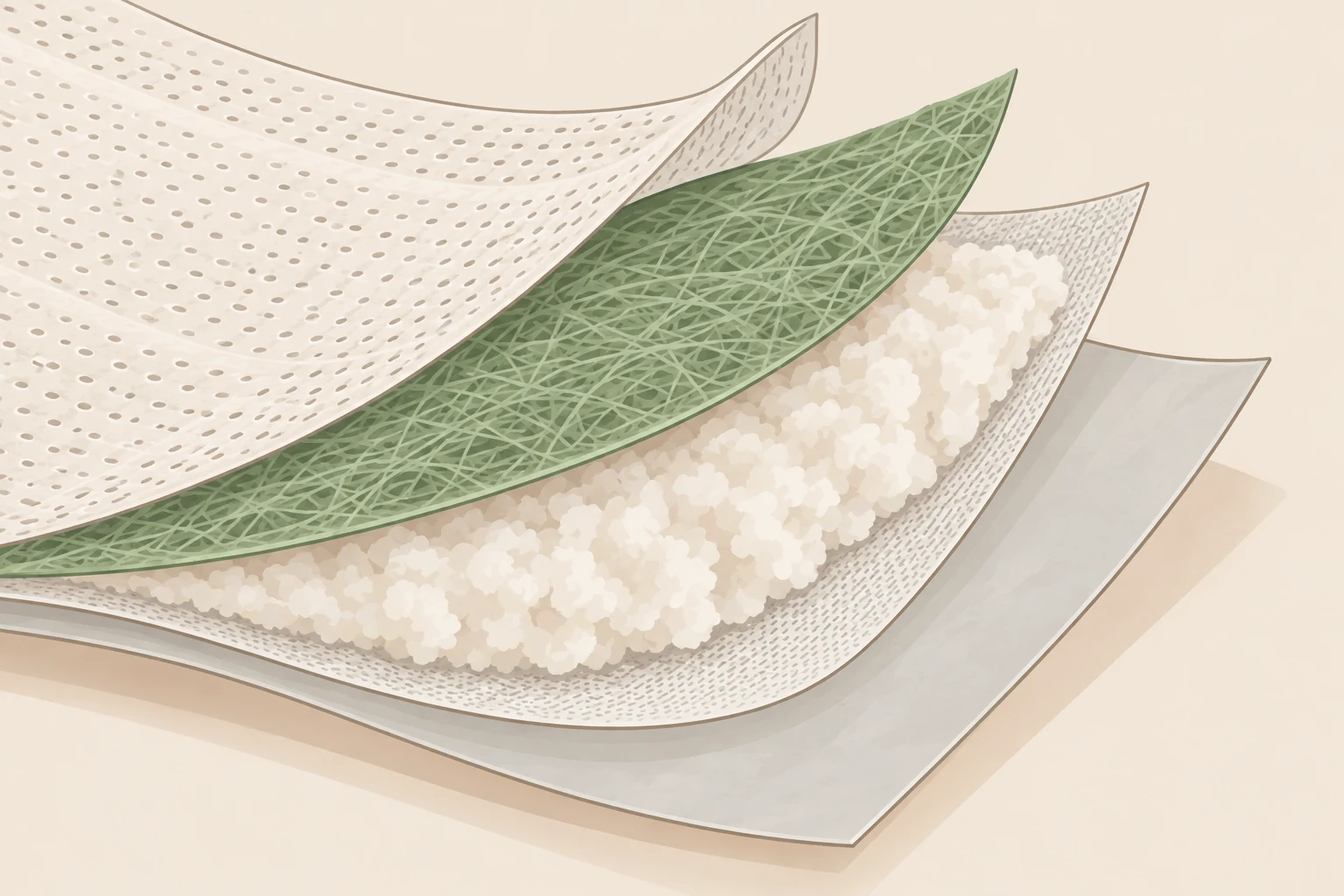
All Incontinence Products articles from Mobility Made Clear.
Elastic waistbands in absorbent briefs generate seal pressure through textile mechanics, not adhesion — here is how e...
Read itWetness indicators on incontinence pads use pH-sensitive dyes that shift color when urine contacts them, signaling sa...
Read itSurge layers in incontinence pads temporarily hold and meter fluid before it reaches the absorbent core, reducing lea...
Read itBacksheet films in absorbent incontinence garments use microporous or monolithic polymer layers to block liquid while...
Read itAcquisition layers in absorbent incontinence products distribute fluid laterally and downward before the core can loc...
Read itSuperabsorbent polymer gel in incontinence product cores traps fluid through osmosis and cross-linking, resisting re-...
Read itWicking fabric moves fluid away from skin through capillary action and fiber geometry, not absorption — here is how t...
Read itLeakproof barriers in incontinence pads use layered polymer films and hydrophobic nonwovens to contain fluid mechanic...
Read itThe chemistry behind odor-control layers in absorbent products, from pH-neutralizing polymers to activated carbon.
Read articleThe structural differences between absorbent incontinence underwear and ordinary underwear, layer by layer.
Read articleThe layered engineering inside an absorbent garment, from acquisition layer to superabsorbent polymer core.
Read article