Grab Bar Surface Texture and Palm Friction
Grab bar surface texture increases friction at the palm by multiplying contact points between skin and metal, resisti...
Read it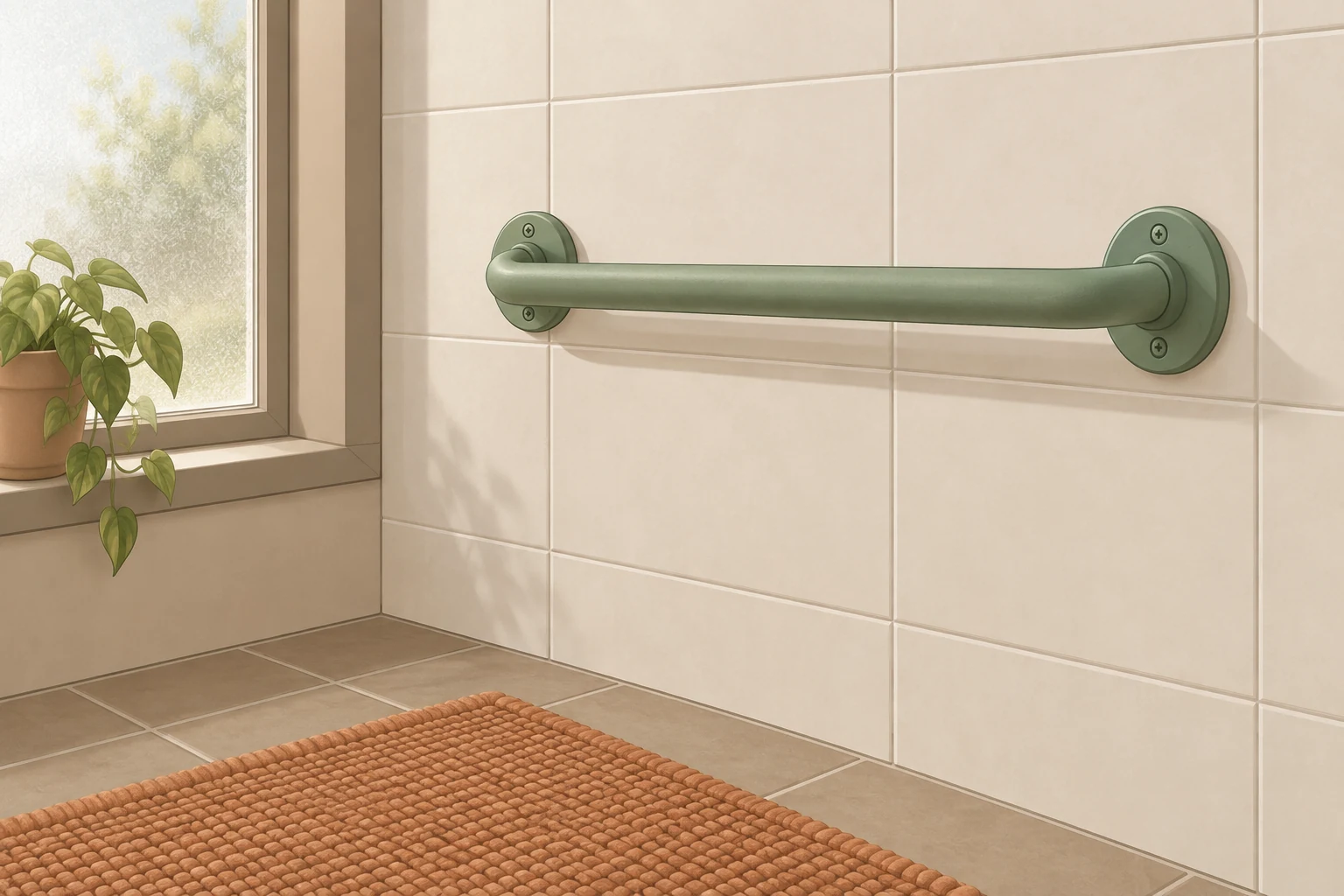
All Home Safety articles from Mobility Made Clear.
Grab bar surface texture increases friction at the palm by multiplying contact points between skin and metal, resisti...
Read itThreshold ramps redistribute vertical floor height changes into a gradual inclined plane using friction, mass, and ma...
Read itTub transfer bench legs spread a sitter's weight across four contact points on wet surfaces through geometry, rubber ...
Read itGrab bar diameter determines how much grip force the hand can generate at the palm — the physics behind why size and ...
Read itFloor drain placement controls where water pools in a bathroom, directly shaping the wet surface area that reduces fr...
Read itGrout line depth alters wet-tile slip resistance by controlling how water drains away from a foot's contact zone — th...
Read itAtmospheric pressure in bar context explains how grab bars transfer human load forces through anchors, wall studs, an...
Read itGrab bar mounting anchors transfer applied force through fasteners into wall studs via shear and tension mechanics — ...
Read itFloor texture alters the contact geometry between a sole and a surface, redirecting friction force to resist slip acr...
Read itSuction cup grab bar anchors hold by differential air pressure, not adhesive. Surface texture, dome geometry, and loa...
Read itThe structural engineering behind a stair handrail system, from baluster spacing to newel post anchoring.
Read articleThe physics of friction behind non-slip bath mats, from suction-cup backing to surface texture.
Read articleWhat a grab bar's weight rating actually measures, from mounting substrate to the ASTM test standard behind it.
Read article